
Narrative


Background & Introduction
The music industry experienced significant changes after the discoveries of Berliner’s gramophone in the late 19th century. The efficiency and convenience of the new audio recording tools provided people with more choices in their music preferences. Besides, more advanced techniques were used in the music industry during the 20th and 21st centuries, which allowed the development of more music genres. Based on the fast growth of technology, we are really interested in how music preferences have changed over time during the last century. Here, we use a Spotify dataset to analyze the music trend. While exploring the dataset and doing some data visualization, we discovered that there was a peak in the average score of energy features of songs around the 2000s, which was the time of the digital revolution. Can this example indicate that the historical events could somehow be related to the music trend? Can the music trend potentially reflect societal trends? By picking some decades from the 20th-21st century, we explore the papers analyzing different periods of time in the 20th-21st century to try to find some clues about the relationship between social/ historical events and music trends in the United States. Combining our data visualization results of the music trends in the 20th and 21st centuries, we also try to figure out potential reasons for the dramatic changes in the pattern in certain years. Below, we provided a short overview of the historical events of some decades from the two centuries and then analyzed these historical contexts and events with our visualization of music trends using the humanities theories we learned from class.
Timeline

1960s
.png)
1970s
1980s
Social and political changes, such as the Civil Rights Movement and the Vietnam War, reflected in the rise of folk, rock, and soul music.

Saw the emergence of disco, punk, and hip-hop, each responding to societal trends and technological advancements.
The Crossover radio format, embracing multi-culturalism and influencing traditional stations, while the HIV Crisis and political limitations marginalized sexual minorities, impacting queer music.

1990s
Grunge and alternative rock expressed youth frustration, while hip-hop grew rapidly, addressing issues like poverty and racism, and music became more global due to MTV and the internet.
2000s
The digital revolution, driven by MP3s and streaming services like Spotify, transformed the music industry, leading to genre blending and hybrid genres. Events like 9/11 Attack and the Financial Crisis influenced music, shaping and reflecting people's psyche.

2010s
Streaming platforms dominated the 2010s, transforming music consumption, while artists used their platforms to address social issues like racial inequality and LGBTQ+ rights, influenced by movements like the #MeToo Movement.

Critical Race Theory and Music Trends
Critical Race Theory(CRT) focuses not only on trying to understand the social situation or how society itself follows the racial line but also on exploring how to change society for a better world (Delgado). The historical events in the 20th and 21st centuries, reflected by the music trends, may potentially show how we can use CRT to help analyze the change in society and how people fight against inequality.

The first thing to notice through the graph above is there is a decrease in the average score of energy during the 1980s. At this time, the average danceability score also shows a slowdown in the growth during the 1980s. Combining these figures with the figures about music genres related to the music features (Energy, Danceability), we may assume that the music genres that dominated the 1980s century have relatively lower energy and danceability scores, such as pop and R&B music. A historical event in the radio station may help us explain this situation during the 1980s: During that time, the emergence of the new radio format, Crossover, made a huge change to the radio industry. The new radio format values multiculturalism and attracts audiences from different cultures and races through fast-paced music such as pop and R&B (Coddington). This aligns with what we observe in the visualization analysis. The sources we found also point out that the Crossover recognizes the presence and taste of Latinx audiences (Coddington). Therefore, the emergence of Crossover, which changed the radio industry, not only brought a huge effect on other traditional top radio stations, but the music it played also helped to promote equality in the racial through the lens of CRT.
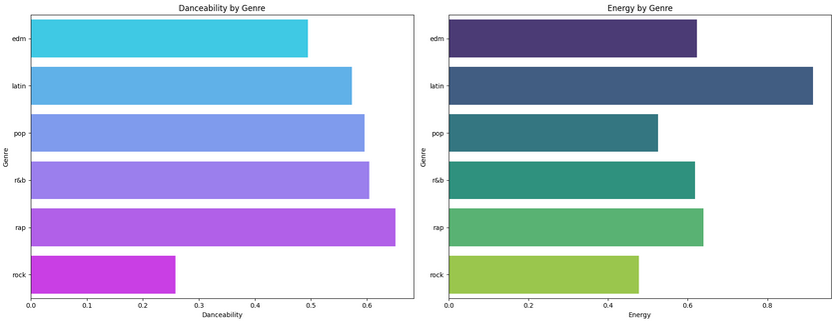
There is also an increase in the Danceability score on the ‘average music trends over decades’ during the 2000s. When we try to combine these trends with the information from figures about relations between music genres and music features, we found that the genres of music popular during the 2000s may have a higher percentage of Danceability in its features, such as hip-pop music. The fast growth of hip-hop music and the 2008 financial crisis may be related to this music trend in visualization. To be more specific, music helped respond to and reflect the economic inequality during and after the financial crisis. As a fast-growing music genre, hip-hop music at that time also reflected similar things.

Therefore, by relating race, class, and economic power together and using the concepts of CRT, we are able to observe how social criticism was shaped by the culture and economy in the United States during the 2000s (Timberg). For example, the conspicuous consumption of popular hip-hop music can be interpreted as a reflection of economic deprivation and pursuance of the American dream in the face of increasing inequality(Timberg). The example helps us to explain the relationship between the popularity of hip-hop music during the 2000s and the economic crisis and how we should analyze it through the view of CRT.
Music Trends and Class Struggles:
A Marxist Perspective
Marxist theory focuses on how economic and class struggles shape society. When we look at the music trends from the 1960s to the 2010s, we can see how these struggles influenced musical styles and themes. For example, the 1960s were a time of major social and political change, starting from the Civil Rights Movement. This movement sought to end racial segregation and discrimination against African Americans and aim for equal rights and justice. According to Marxist theory, these struggles were deeply rooted in economic and class issues. African Americans faced systemic oppression that kept them economically disadvantaged and socially marginalized. Artists used their songs to highlight the pain and determination of the fight for equality. These songs provided not just comfort and solidarity but also a call to action, which reflects the economic and social injustices that the movement sought to address. Therefore, music became a powerful tool in the Civil Rights Movement. The rise of music genres can be seen as a reflection of the underlying class struggles and the push for a more just society. They symbolized the era’s spirit of resistance and hope, showing everyone's desire for change.

Our graph titled "Average Music Features Over Decade" reveals an overall increase in the average energy score of music from the 1960s to the 2010s, with some fluctuations. This trend mirrors the historical events of each era. In the 1960s, music was heavily influenced by the Civil Rights Movement and anti-war protests, with high-energy genres like rock and soul emerging. In the 1970s and 1980s, disco and punk brought fast tempos and energetic beats. From the 1980s to the 1990s, there was a slight decrease, likely reflecting the rise of grunge and alternative rock, which had a less upbeat and more raw sound compared to the high-energy pop and dance music of the 1980s. Another slight decrease is seen from the 2000s to the 2010s, potentially due to the rise of more mellow genres, such as indie and acoustic music, balancing out the high-energy electronic and hip-hop tracks dominating the charts. These ups and downs reflect how social changes and cultural shifts influence the musical landscape over time. Overall, the shifts in music energy in the graph illustrate how historical events and economic conditions influence cultural expression. Music evolves in response to the changing needs and feelings of society, embodying the ongoing struggle between different social and economic forces, a key aspect of Marxist theory.
Gender Bias in Music Danceability
and Popularity

The first graph “average Danceability by gender representation” shows that songs by male artists have a higher average than female and unknown artists. This means there’s a bias towards producing and promoting more danceable music by males. Danceability impacts commercial success and songs being popular in clubs, parties and social media dance trends. Male artists’ songs have higher danceability which means they are produced and marketed with these contexts in mind giving them a commercial advantage.

As in the second graph “Average popularity by gender representation”, female artists have an average popularity almost as high as male artists. This means there’s more visibility and acceptance of female musicians. But with lower danceability scores for female artists, it means there’s still a bias on how music produced by women is perceived and sold. This gap comes from the historical preference of male artists in certain genres in the music industry that’s why we need to eliminate these biases.
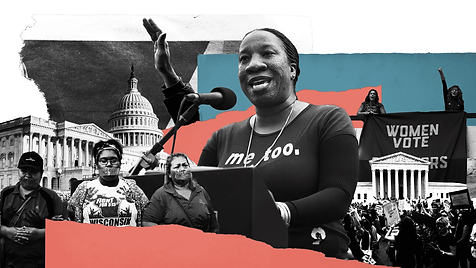
The #MeToo Movement has brought up discussions on gender equality in many sectors including music. It exposed cases of harassment, discrimination and underrepresentation of women. So the advocacy for inclusive measures such as more exposure for women artists; equal performance opportunity among them; and their music promotion across different platforms has intensified. These are the solutions to the bias shown by both graphs on danceability and popularity.
In summary, the graphs mean the fight for gender equality in the music industry is ongoing. Women musicians are getting famous but there must be equality of opportunity for their songs to be produced, promoted or enjoyed as much as male ones. The industry must continue to push for full gender equality by supporting all artists. The #MeToo movement started the conversations and actions towards this goal and built on that and kept the momentum going.
Conclusion
Our project has explored the relationship between historical events from the 1960s to the 2010s and their reflection in music trends, using Critical Race Theory, Marxist theory, and Feminist theory as lenses. The timeline highlights how music has been a mirror for social changes. Our data shows fluctuations in music and illustrates how these connections link cultural expressions to economic and social dynamics. Critical Race Theory helps us understand how movements for racial equality have shaped musical genres and themes. Marxist theory provides a framework for examining how class struggles and economic conditions influence cultural production, as seen in the rise of the Civil Rights Movement in the 1960s, grunge in the 1990s and the digital transformation of music in the 2000s. Feminist theory, with its focus on gender equality and representation, connects to the increasing prominence of female artists and the themes of empowerment in music, especially during the MeToo era.
Our project highlights the important connection between humanities and social development. By analyzing music through these theoretical lenses, we can gain a deeper understanding into the cultural impact of historical events. Understanding these relationships helps us learn about the human experiences and the ways art reflects and influences social dynamics. This study matters because it highlights the power of music as a cultural force that both shapes and is shaped by the struggles for justice, equality, and economic change. It reminds us that the humanities provide essential tools for exploring the complexities of human society and using the power of art in shaping and reflecting our world.
References
Austin, Mike. “Marxism Criticism.” The Critical Experience : Literary Reading, Writing, and Criticism,
Kendall/Hunt, Dubuque, IA, 1994, pp. 194–213.
Delgado, Richard. Critical Race Theory : An Introduction. New York : New York University Press, 2001. Internet
Archive, http://archive.org/details/criticalracetheo0000delg.
Houston, Gail T. “Feminism Criticism.” The Critical Experience : Literary Reading, Writing, and Criticism,
Kendall/Hunt, Dubuque, IA, 1994, pp. 214–234.